FMIPA UGM Chemistry Students Successfully Research BSF Maggot Oil Development as a Palm Oil Alternative for Bioavtur Feedstock, Supporting Energy and Food Security
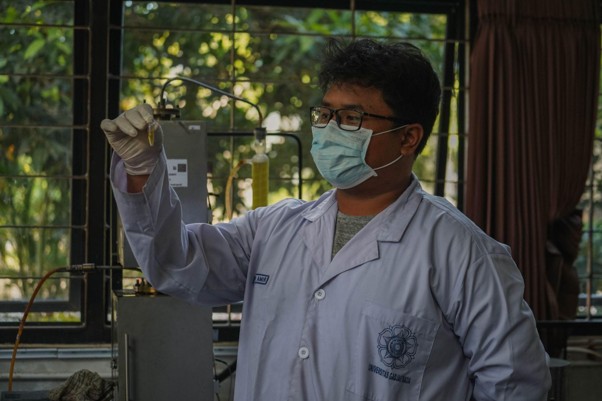
Revaldo Anugerah Putra Pradana, a graduate student in Chemistry at the Faculty of Mathematics and Natural Sciences (FMIPA), Universitas Gadjah Mada (UGM), has successfully explored the potential of Black Soldier Fly (BSF) maggot oil as a feedstock for bioavtur, a sustainable aviation fuel. This innovation offers an alternative energy source that does not directly compete with food needs, requires less land than oil palm cultivation, and utilizes maggots to process organic waste. The high lauric acid content in BSF maggot oil is also considered to have the potential to make its conversion into bioavtur more efficient.
Current conditions indicate that forest conversion into oil palm plantations is widespread in Indonesia, with haze disasters in Kalimantan and Sumatra being among the associated impacts. This issue could become more severe if future renewable energy needs become dependent on palm oil. From an economic perspective, diverting palm oil toward energy production would increase demand, potentially raising the price of palm oil-based food products such as cooking oil. Furthermore, BSF maggots’ ability to consume organic waste could also help address Indonesia’s waste management challenges if developed more extensively.
“Using palm oil as an energy feedstock has the potential to create a dilemma between food and energy needs. Meanwhile, BSF maggots are not a food source and can also be used to convert organic waste,” said Revaldo.
In addition to the issue of land use, the oil composition of BSF maggots was another reason for conducting this research. BSF maggot oil is predominantly composed of lauric acid (C12:0), whereas palm oil contains higher levels of oleic acid (C18:1). The shorter carbon chain of lauric acid is considered more compatible with the hydrocarbon range of aviation fuel, potentially reducing the need for cracking during the conversion process.
“Because its carbon chain and alkyl group are already more compatible with the aviation fuel range, the processing could potentially be simpler and require less energy than feedstocks that require further cracking reactions, such as palm oil,” he explained.
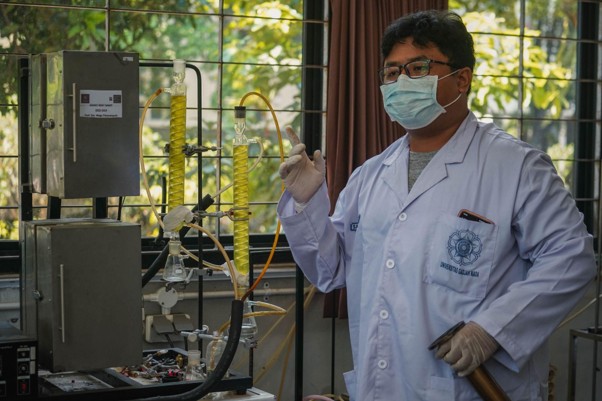
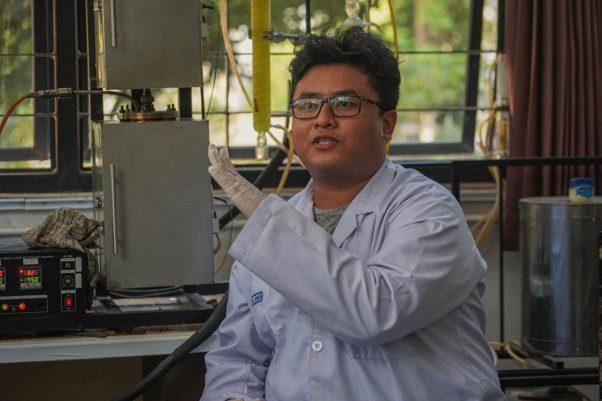
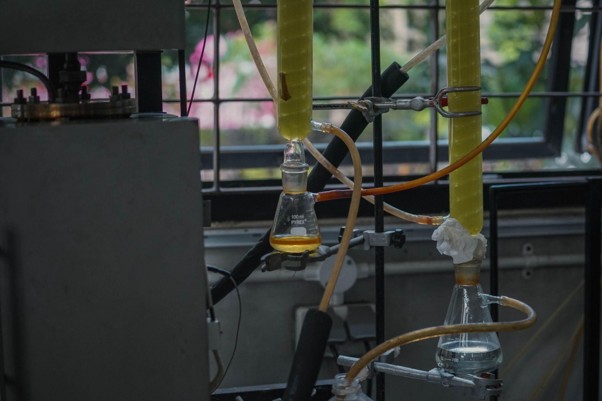
In this research, Revaldo used molybdenum- and nickel-based catalysts in a double-batch furnace reactor. The feedstock was heated until it turned into gas and was then directed into a batch containing the catalyst to undergo a deoxygenation reaction. The resulting product was subsequently condensed to produce bioavtur.
“This research certainly requires further development. I hope researchers from various disciplines can continue and explore this idea so that one day it will not remain limited to the research scale, but can be developed toward industrial-scale production and ultimately applied in society,” he said.
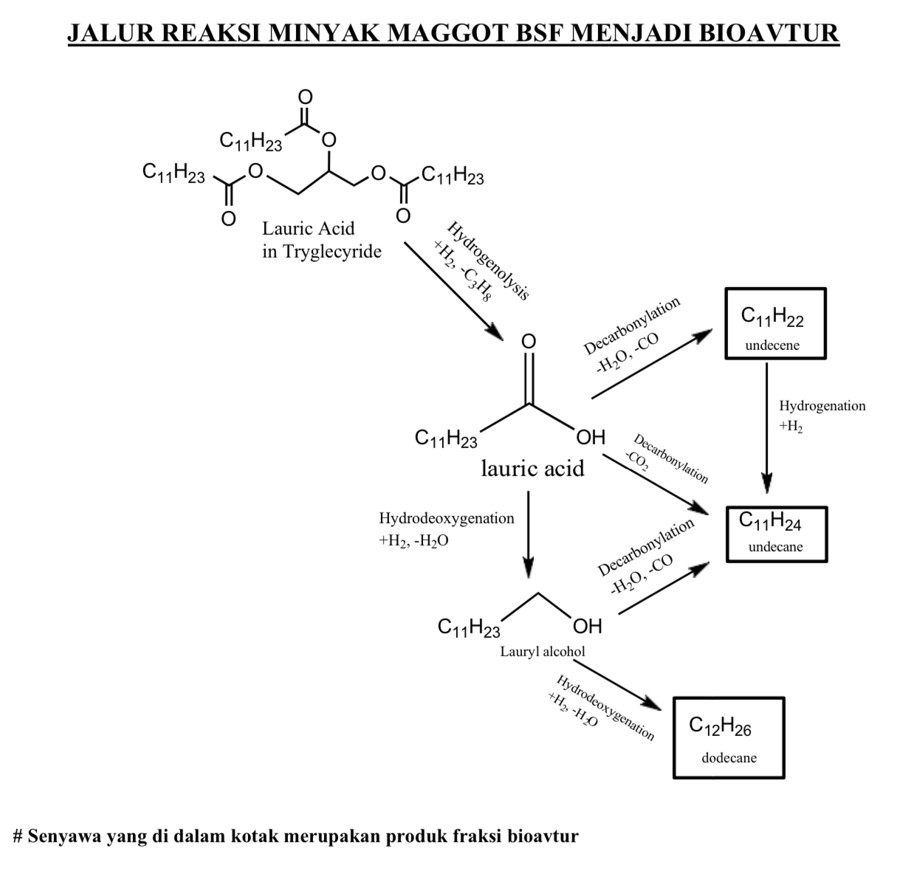
More than simply seeking an alternative aviation fuel, this research also raises broader questions about the direction of the energy transition. Growing energy needs must go hand in hand with meeting food demands and managing natural resources sustainably.
“The energy transition is not only about replacing fossil fuels, but also about meeting energy needs without compromising food security and the environment,” Revaldo concluded.
This research also aligns with efforts to achieve the Sustainable Development Goals (SDGs), particularly SDG 7 on Affordable and Clean Energy through the development of alternative fuel sources for aviation. The utilization of BSF maggot oil is also consistent with SDG 12 on Responsible Consumption and Production, as it connects organic waste processing with the development of energy feedstocks. Meanwhile, developing bioavtur feedstocks that do not depend on food commodities and require less land strongly supports SDG 13 on Climate Action by promoting the development of more sustainable energy systems.


Penulis: Inna Mutifah
Fotografer: Afiandina Sukma