FMIPA UGM Provides 10 Water Tanker Deliveries to Help Kamal Residents Cope with Drought
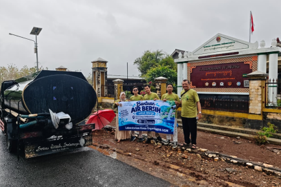
The Organic Chemistry Laboratory’s community service initiative connects support for residents’ basic needs with efforts to strengthen agricultural knowledge in Gunungkidul.
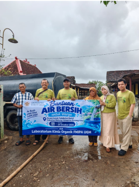
Gunungkidul, October 24, 2026 — The Organic Chemistry Laboratory, Department of Chemistry, Faculty of Mathematics and Natural Sciences at Universitas Gadjah Mada (FMIPA UGM), distributed 10 tanker loads of clean water to residents of Kamal Hamlet, Wunung Village, Wonosari Subdistrict, Gunungkidul Regency, on Saturday (October 24). The assistance was intended to help meet the clean water needs of approximately 150 households, or around 500 people, facing limited water supplies during the dry season.
The distribution was part of a series of community service activities conducted by the FMIPA UGM Organic Chemistry Laboratory in Wunung, Duwet, and Mulo villages. Through this initiative, lecturers and educational support staff responded to urgent community needs while strengthening the university’s relationship with residents in its community development areas.
Helping Meet Residents’ Basic Needs
Access to clean water is a fundamental necessity that affects many aspects of daily household life. For residents experiencing water shortages during the dry season, additional supplies are expected to ease the burden of meeting their everyday needs.
The assistance was symbolically handed over by Prof. Tutik Dwi Wahyuningsih, M.Si., Dr. Yehezkiel Steven K., M.Eng., and Dr. Sugeng Triono, M.Si., representing the team of lecturers and educational support staff from the FMIPA UGM Organic Chemistry Laboratory.
The initiative reflects the university’s commitment to incorporating social responsibility into its community service activities. The team’s presence among residents also provided an opportunity to recognize that community needs should be an important consideration in determining how universities contribute to society.
The clean water assistance was a response to immediate needs. Ensuring sustained access to water, however, remains a shared challenge that requires continued attention. The benefits of this assistance should therefore be viewed as part of broader efforts to strengthen community resilience during the dry season.
Extending Community Service to Clean Water and Agriculture
On the same day, the Organic Chemistry Laboratory team also organized a technical training session on pest and disease management in food crops and horticultural plants at the Wunung Village Hall. The session provided farmers and growers from Wunung, Duwet, and Mulo with guidance on identifying crop problems and understanding appropriate control measures.
Together, the two activities addressed interconnected community needs. Water supplies help meet essential household requirements, while agricultural training is expected to strengthen residents’ capacity to protect their crops and reduce the risk of harvest losses.
Through this series of community service initiatives, FMIPA UGM connects social responsibility with the practical application of academic expertise. Clean water assistance was provided in response to residents’ needs, while scientific knowledge was shared through technical agricultural training relevant to local conditions.
Supporting the Sustainable Development Goals
The clean water distribution aligns with SDG 6: Clean Water and Sanitation, particularly its objective of improving access to clean water. The initiative contributes by providing additional water supplies to residents in need, while recognizing that temporary assistance does not, on its own, resolve the broader challenges of ensuring reliable access to water.
Meanwhile, the agricultural training supports SDG 2: Zero Hunger by strengthening knowledge that can help maintain food production. Training on sustainable crop pest and disease management also relates to SDG 15: Life on Land, which emphasizes the protection and sustainable use of terrestrial ecosystems.
Fostering a Culture of Academic Engagement and Social Responsibility
The involvement of lecturers and educational support staff demonstrates that universities can contribute to society through both academic expertise and direct social action. For alumni, the initiative offers an opportunity to see how their alma mater continues to serve communities. For prospective students, it illustrates how direct community engagement can provide opportunities to understand and address real-world challenges.
Looking ahead, sustained relationships with local communities can provide a foundation for developing collaborative initiatives with partners. By listening to residents’ needs and evaluating the benefits of its activities, FMIPA UGM can continue expanding its community service efforts in ways that are relevant, targeted, and supportive of global development goals at the local level.
Writer: Deni Pranowo
Editor: Robby Noor Cahyono
Photographer: Yehezkiel Steven Kurniawan