Science Addresses Agricultural Challenges: FMIPA UGM Strengthens Farmers’ Capacity in Gunungkidul
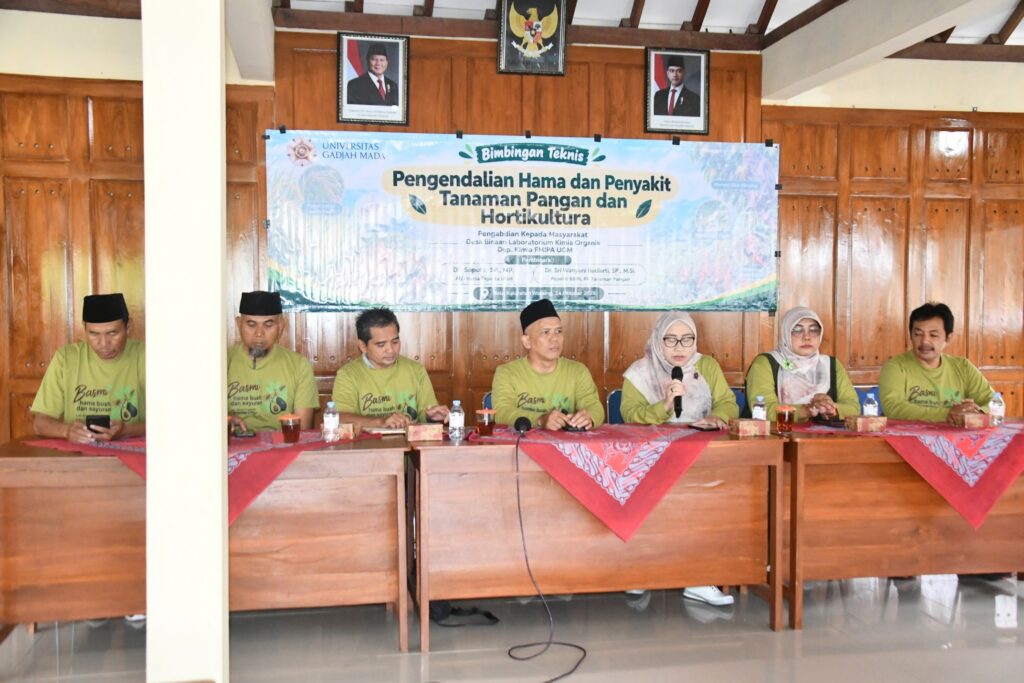
The Organic Chemistry Laboratory brings together expertise from multiple institutions to support productive and sustainable agriculture through its community-based village development program.
Gunungkidul, October 24, 2026 — The Organic Chemistry Laboratory, Department of Chemistry, Faculty of Mathematics and Natural Sciences at Universitas Gadjah Mada (FMIPA UGM), held a technical training session on pest and disease management in food crops and horticultural plants at the Wunung Village Hall, Wonosari Subdistrict, Gunungkidul Regency, on Saturday (October 24). Featuring experts from several institutions, the program equipped farmers and growers from Wunung, Duwet, and Mulo villages with the knowledge to identify crop problems and determine appropriate, sustainable control measures.
Led by Dr. Deni Pranowo, S.Si., M.Si., the activity was part of the Organic Chemistry Laboratory’s Community Service Program under its Village Development Scheme. The program connects community needs with academic expertise to help maintain agricultural productivity and improve farmers’ well-being.
Bringing Scientific Knowledge to Everyday Challenges
For the communities of Wunung, Duwet, and Mulo, farming and horticulture are important sources of livelihood. Rice, peanuts, corn, chili peppers, shallots, avocados, and mangoes are among the area’s key agricultural products. However, pest infestations and plant diseases can reduce crop yields and place additional pressure on household incomes.
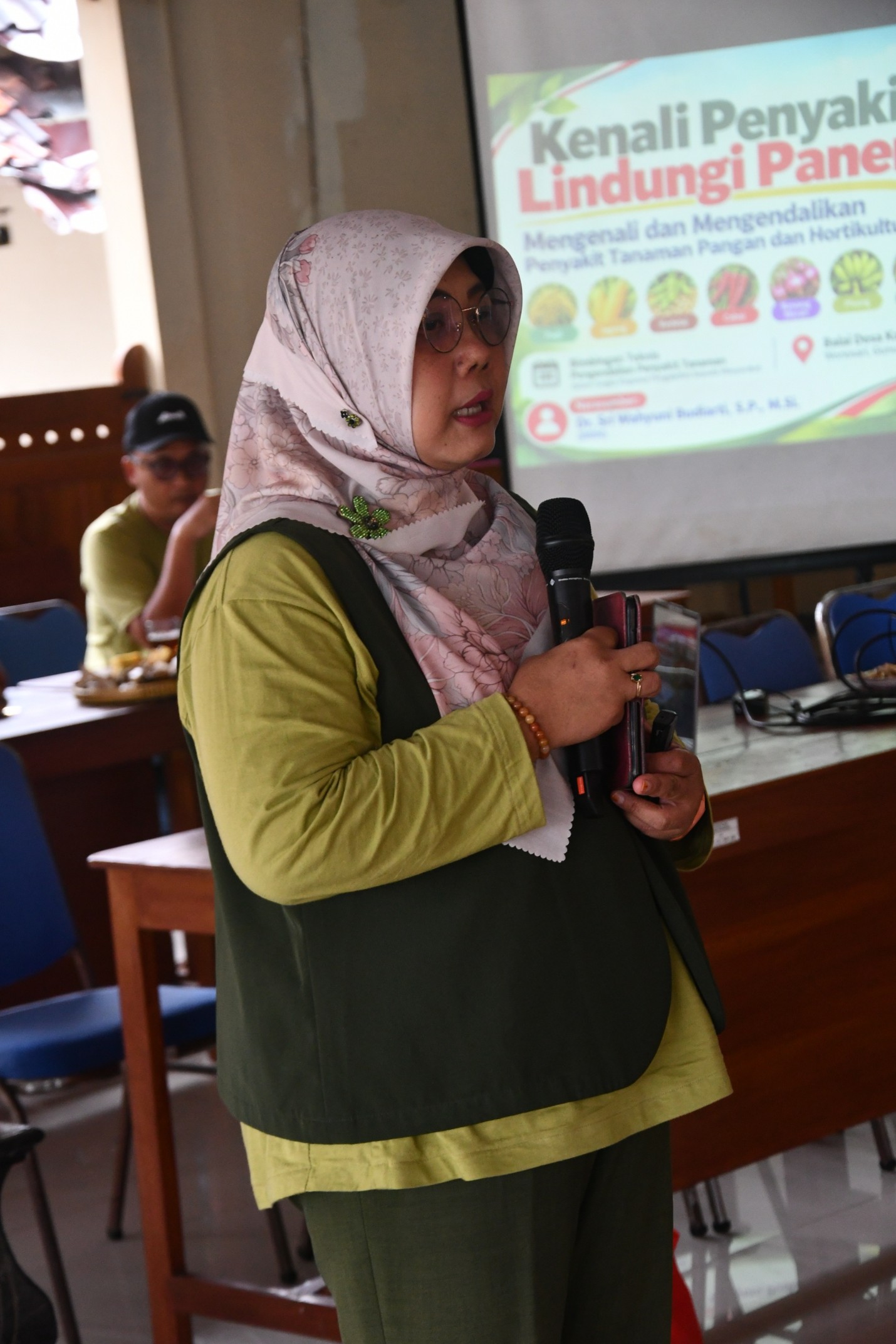
To address these challenges, the program featured Dr. Suputa, S.P., M.P., a pest management expert from UGM’s Faculty of Agriculture, and Dr. Sri Wahyuni Budiarti, S.P., M.Si., a plant disease researcher from Indonesia’s National Research and Innovation Agency (BRIN).
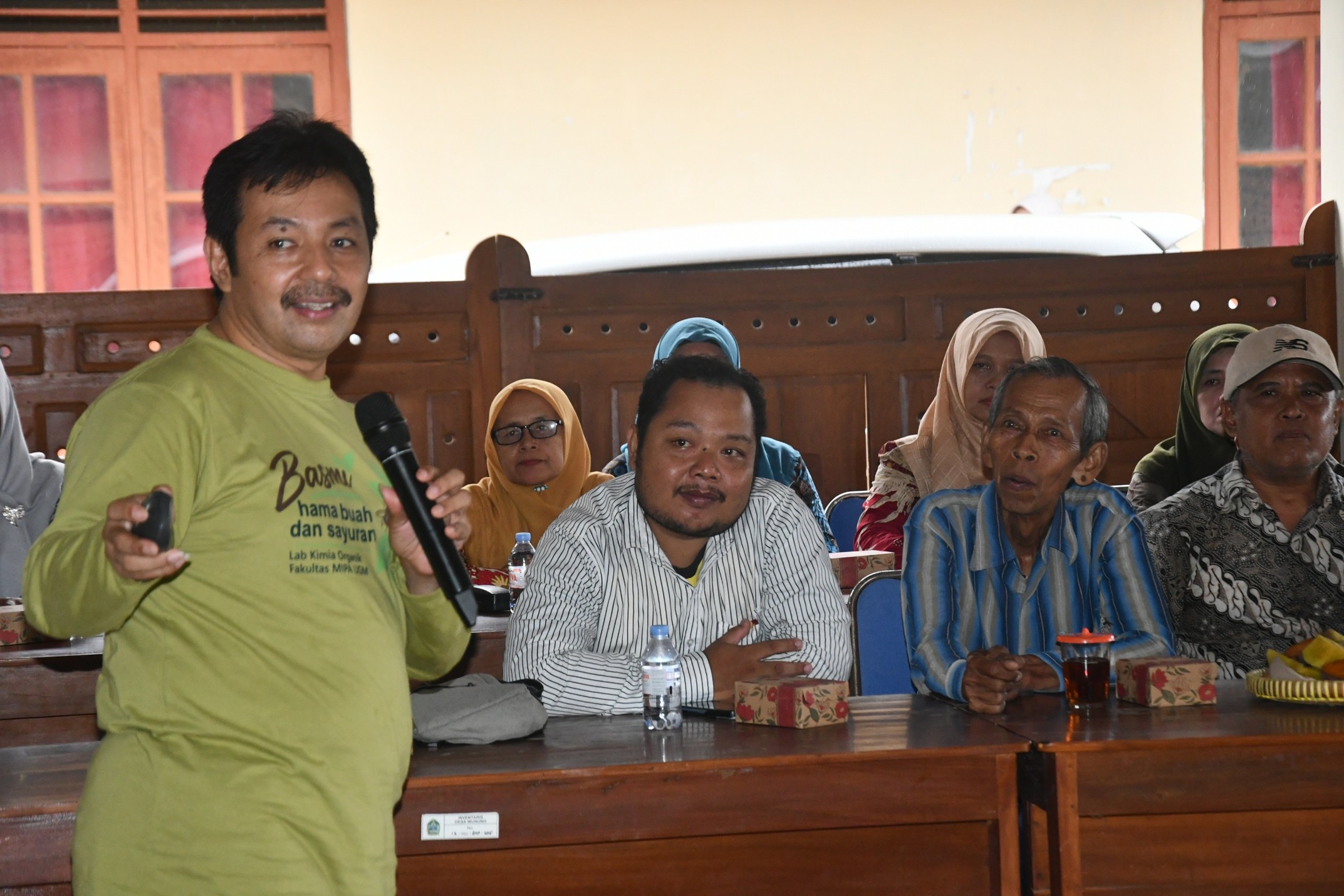
The sessions covered pest and disease identification, recognition of infestation symptoms, and prevention and control strategies tailored to crop characteristics and field conditions. This knowledge is expected to help farmers detect problems early and select appropriate interventions based on the underlying causes.
The principle is straightforward: accurate identification is the foundation of effective management. Through integrated pest management, farmers were encouraged to consider crop conditions and environmental sustainability when making decisions about controlling pests and plant diseases.
Connecting Crop Protection with Conservation
In addition to crop pests and diseases, local communities also face challenges caused by monkeys entering agricultural and plantation areas. Addressing this issue requires balancing the protection of agricultural yields with community safety and wildlife conservation.
Edi Warsito, representing the Gunungkidul region of the Yogyakarta Special Region Natural Resources Conservation Agency (BKSDA), provided information on the issue and the challenges involved in managing it. His presentation highlighted the importance of coordination among local communities, village administrations, and relevant authorities in developing targeted responses.
The participation of experts from UGM, BRIN, and BKSDA demonstrated the value of an interdisciplinary approach to understanding agricultural challenges in their broader context. FMIPA UGM served as a bridge between scientific knowledge, community experience, and the responsibilities of relevant institutions.
Making a Tangible Contribution to the Sustainable Development Goals
The program supports SDG 2: Zero Hunger, particularly by strengthening the knowledge needed to maintain agricultural productivity and promote sustainable farming systems. Early identification of crop problems is expected to help reduce the risk of crop losses.
Its contribution to SDG 4: Quality Education is reflected in the provision of learning opportunities for communities beyond the university classroom. Expertise from universities and research institutions was translated into practical knowledge relevant to farmers’ daily work.
Discussions on human–wildlife conflict also align with SDG 15: Life on Land, integrating conservation considerations into crop protection efforts. Meanwhile, the involvement of multiple institutions and local communities reflects SDG 17: Partnerships for the Goals.
These contributions represent the development objectives supported by the program. Realizing their long-term impact will require continued implementation, follow-up, and evaluation.
Building Partnerships and Expanding the Benefits of Science
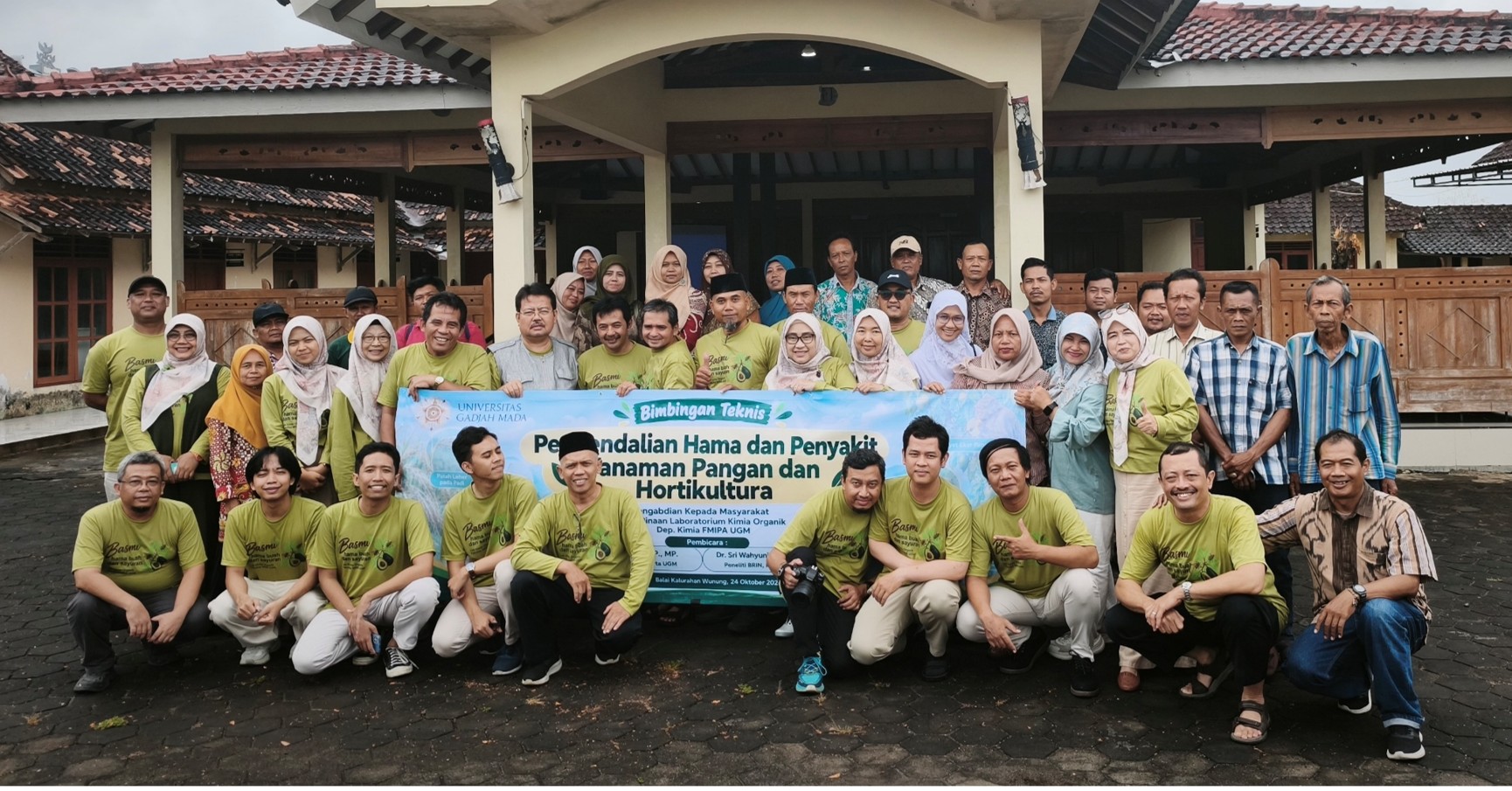
The Head of the Organic Chemistry Laboratory, Dr. Endang Astuti, M.Si., stated that the activity was part of an annual community service initiative aimed at improving community well-being. Wunung Village Head Sudarto expressed hope that the knowledge shared would help farmers and growers address challenges in the field.
The program was supported by all lecturers and staff members of the Organic Chemistry Laboratory. This collective effort highlights the role of university academics and educational support staff in delivering meaningful benefits to the wider community.
For alumni, the initiative offers another reason to take pride in their alma mater and remain engaged in its community contributions. For prospective students, it demonstrates how studying science can open opportunities to understand and address real-world challenges. For institutional partners, the program illustrates the potential for collaboration grounded in professional expertise and community needs.
Moving forward, sustained community assistance and the evaluation of how the knowledge is applied will be essential to strengthening the program’s impact. Through its village development initiative, FMIPA UGM reaffirms its commitment to advancing local contributions toward global development goals: resilient agriculture, environmental conservation, and empowered communities.
Writer: Deni Pranowo
Editor: Robby Noor Cahyono
Photographer: Robby Noor Cahyono