
Search

UNIVERSITAS GADJAH MADA FACULTY OF MATHEMATICS AND NATURAL SCIENCES 

Search

UNIVERSITAS GADJAH MADA FACULTY OF MATHEMATICS AND NATURAL SCIENCES 

Search

UNIVERSITAS GADJAH MADA FACULTY OF MATHEMATICS AND NATURAL SCIENCES 

Inovasi

FMIPA UGM and Pertamina Hulu Energi Collaborate to Create Tools to Increase Oil and Natural Gas Production Reserves.

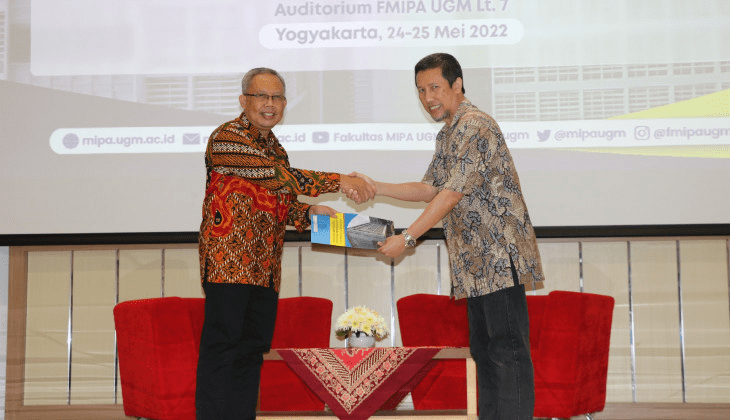
The Faculty of Mathematics and Natural Sciences (FMIPA) at UGM conducted the handover of a cooperation contract between PT. Pertamina Hulu Energi and the Faculty of Mathematics and Natural Sciences (FMIPA) at UGM in the FMIPA auditorium on the 7th floor, Tuesday (24/5). This cooperation contract includes the creation of a prototype underwater seismometer module for passive seismic data recording in shallow water environments, a clean technology study for water injection monitoring (sp-ert), cloud computing tools for seismic geophysics, and a study on electric-assisted oil recovery to increase oil and gas production.

The Dean of FMIPA, Prof. Dr. Kuwat Triyana, M.Si., stated that this research cooperation has been ongoing since the beginning of the year and is still in progress. Typically, the research and studies involve the development of tools and software to enhance oil and gas production in well exploration areas managed by Pertamina. “Out of these four studies, some have a duration of three months, while others last for a year. We create software and build devices in the FMIPA laboratory,” he said.

In this research cooperation contract, Kuwat mentioned that four principal researchers and 20 students and alumni are involved. According to Kuwat, this collaboration will be ongoing as per the needs of Pertamina Hulu Energi. “There are plans to further develop this collaboration in the areas of blue energy, corrosion, chemistry, and computation,” he added.

Kuwat stated that collaboration with the industry is a way to bring the results of FMIPA’s research and innovation closer to be used by industries in supporting development in the country. “FMIPA is currently developing schemes for fundamental and applied research. For applied research, if there are issues in the industrial world and they ask for our assistance, we should be ready,” he explained.

Furthermore, Kuwat explained that in the development of applied research, FMIPA is currently trying to develop non-lithium battery technology using raw materials from Bangka Island. “We are challenged to create non-lithium battery sources from the metals available on Bangka Island. The challenge is how to explore these materials to make batteries. It stands alone, unlike coal, it requires extraction. We know that Erick Thohir (Minister of State-Owned Enterprises) has allocated two trillion for battery development,” he stated.

Representative from Upstream Innovation at PT. Pertamina Hulu Energi, Arif Rahman, mentioned that the establishment of Upstream Innovation is to support the increase in oil and gas reserve exploration. “This collaboration is aimed at developing ideas, concepts, and innovations from the campus to support oil and gas production,” he said.

It is hoped that through this research collaboration, it will support the operational activities of Pertamina Hulu Energi in increasing oil and gas reserves. “Hopefully, this collaboration can continue and strengthen the good relationship that has been established so far,” he concluded.

Source: [UGM News](https://ugm.ac.id/id/berita/22533-fmipa-ugm-dan-pertamina-hulu-energi-bikin-alat-untuk-meningkatkan-cadangan-produksi-minyak-dan-gas-bumi)
Read More

Pakar UGM Ingatkan Bahaya Banjir Bandang Pasca Erupsi Gunung Semeru

UGM experts have warned of secondary or indirect dangers resulting from the eruption of Mount Semeru. In addition to the eruption and pyroclastic flow that occurred on December 4th, there is a potential for secondary hazards such as flash floods carrying volcanic material in upstream areas.

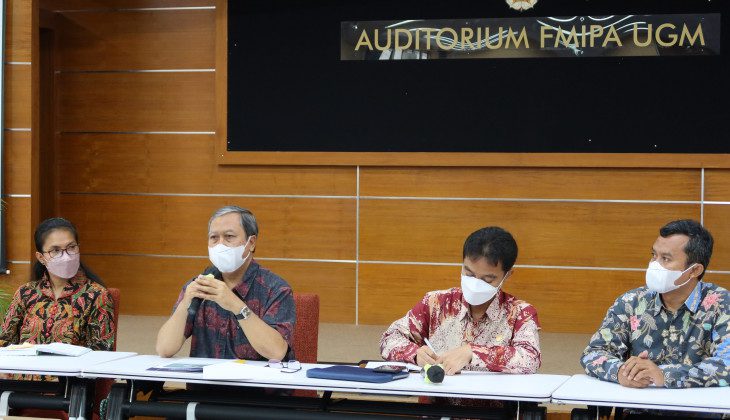
“Even though the eruption has ended, the potential for disaster threats still exists. In December, January, and February, we need to be aware of the potential for lava flows and possible subsequent eruptions,” said Dr. Danang Sri Hadmoko S.Si., M.Sc., a Faculty Member of the UGM Geography Department, during a press conference at the FMIPA UGM Auditorium on Monday (6/12).

He explained that the La Niña phenomenon is bringing the potential for heavy rainfall, so people in areas with rivers originating from Mount Semeru need to be cautious. Residents should also avoid activities within the designated danger radius established by local authorities.

“Some rivers originating from Semeru need to be monitored so that when lava flows occur in the middle and lower parts, where many settlements are located, lives can be saved,” he said.

He also pointed out that there is a potential for hot materials, so evacuation processes need to be carried out carefully and involve parties with an understanding of the volcano’s conditions.

Residents in the eruption-affected areas are advised to wear masks and protective eyewear to avoid health hazards from volcanic ash, which contains silica and is of micro size.

Dr. Wahyudi, M.S., a UGM Geophysics expert, explained that since 2012, Mount Semeru had been classified as Level 2 or “Waspada” (Watch). Then, in September 2020, signs of activity were observed in the form of white and gray smoke plumes reaching heights of 200-700 meters above the peak of Semeru.

Similar activity continued in October 2020, reaching heights of 200-1000 meters, and on December 1, 2020, a pyroclastic flow occurred, extending 2 to 11 kilometers southeast toward Kobokan. In the last 90 days, there has been an increase in seismic activity, especially volcanic earthquakes.

“Some reached 100 times a day, which can serve as a precursor to a larger eruption,” said Wahyudi.

According to Wahyudi, the collapse of the lava dome triggered by heavy rainfall led to the occurrence of the pyroclastic flow, which traveled quite a distance, reaching 11 kilometers. Scientifically, heavy rainfall can cause instability in lava deposits.

“In some cases, external factors like heavy rainfall can indeed cause thermal stress and trigger instability within the lava dome. The lava dome becomes unstable, and the presence of heavy rainfall triggers landslides,” he explained.

To determine the dominant factors causing the eruption on December 4th, he suggested conducting an integrated data analysis covering volcanic earthquake data, deformation, gas emissions, and rainfall data over the past few months. These data should be correlated with events, including small and large-scale collapses.

Writer : Gloria

Source : https://ugm.ac.id/id/berita/22051-pakar-ugm-ingatkan-bahaya-banjir-bandang-pasca-erupsi-gunung-semeru

Read More

FMIPA UGM and Pertamina Hulu Energi Collaborate to Create Tools to Increase Oil and Natural Gas Production Reserves.

The Faculty of Mathematics and Natural Sciences (FMIPA) at UGM conducted the handover of a cooperation contract between PT. Pertamina Hulu Energi and the Faculty of Mathematics and Natural Sciences (FMIPA) at UGM in the FMIPA auditorium on the 7th floor, Tuesday (24/5). This cooperation contract includes the creation of a prototype underwater seismometer module for passive seismic data recording in shallow water environments, a clean technology study for water injection monitoring (sp-ert), cloud computing tools for seismic geophysics, and a study on electric-assisted oil recovery to increase oil and gas production.

The Dean of FMIPA, Prof. Dr. Kuwat Triyana, M.Si., stated that this research cooperation has been ongoing since the beginning of the year and is still in progress. Typically, the research and studies involve the development of tools and software to enhance oil and gas production in well exploration areas managed by Pertamina. “Out of these four studies, some have a duration of three months, while others last for a year. We create software and build devices in the FMIPA laboratory,” he said.

In this research cooperation contract, Kuwat mentioned that four principal researchers and 20 students and alumni are involved. According to Kuwat, this collaboration will be ongoing as per the needs of Pertamina Hulu Energi. “There are plans to further develop this collaboration in the areas of blue energy, corrosion, chemistry, and computation,” he added.

Kuwat stated that collaboration with the industry is a way to bring the results of FMIPA’s research and innovation closer to be used by industries in supporting development in the country. “FMIPA is currently developing schemes for fundamental and applied research. For applied research, if there are issues in the industrial world and they ask for our assistance, we should be ready,” he explained.

Furthermore, Kuwat explained that in the development of applied research, FMIPA is currently trying to develop non-lithium battery technology using raw materials from Bangka Island. “We are challenged to create non-lithium battery sources from the metals available on Bangka Island. The challenge is how to explore these materials to make batteries. It stands alone, unlike coal, it requires extraction. We know that Erick Thohir (Minister of State-Owned Enterprises) has allocated two trillion for battery development,” he stated.

Representative from Upstream Innovation at PT. Pertamina Hulu Energi, Arif Rahman, mentioned that the establishment of Upstream Innovation is to support the increase in oil and gas reserve exploration. “This collaboration is aimed at developing ideas, concepts, and innovations from the campus to support oil and gas production,” he said.

It is hoped that through this research collaboration, it will support the operational activities of Pertamina Hulu Energi in increasing oil and gas reserves. “Hopefully, this collaboration can continue and strengthen the good relationship that has been established so far,” he concluded.

Source: [UGM News](https://ugm.ac.id/id/berita/22533-fmipa-ugm-dan-pertamina-hulu-energi-bikin-alat-untuk-meningkatkan-cadangan-produksi-minyak-dan-gas-bumi)

Read More

Pakar UGM Ingatkan Bahaya Banjir Bandang Pasca Erupsi Gunung Semeru

UGM experts have warned of secondary or indirect dangers resulting from the eruption of Mount Semeru. In addition to the eruption and pyroclastic flow that occurred on December 4th, there is a potential for secondary hazards such as flash floods carrying volcanic material in upstream areas.

“Even though the eruption has ended, the potential for disaster threats still exists. In December, January, and February, we need to be aware of the potential for lava flows and possible subsequent eruptions,” said Dr. Danang Sri Hadmoko S.Si., M.Sc., a Faculty Member of the UGM Geography Department, during a press conference at the FMIPA UGM Auditorium on Monday (6/12).

He explained that the La Niña phenomenon is bringing the potential for heavy rainfall, so people in areas with rivers originating from Mount Semeru need to be cautious. Residents should also avoid activities within the designated danger radius established by local authorities.

“Some rivers originating from Semeru need to be monitored so that when lava flows occur in the middle and lower parts, where many settlements are located, lives can be saved,” he said.

He also pointed out that there is a potential for hot materials, so evacuation processes need to be carried out carefully and involve parties with an understanding of the volcano’s conditions.

Residents in the eruption-affected areas are advised to wear masks and protective eyewear to avoid health hazards from volcanic ash, which contains silica and is of micro size.

Dr. Wahyudi, M.S., a UGM Geophysics expert, explained that since 2012, Mount Semeru had been classified as Level 2 or “Waspada” (Watch). Then, in September 2020, signs of activity were observed in the form of white and gray smoke plumes reaching heights of 200-700 meters above the peak of Semeru.

Similar activity continued in October 2020, reaching heights of 200-1000 meters, and on December 1, 2020, a pyroclastic flow occurred, extending 2 to 11 kilometers southeast toward Kobokan. In the last 90 days, there has been an increase in seismic activity, especially volcanic earthquakes.

“Some reached 100 times a day, which can serve as a precursor to a larger eruption,” said Wahyudi.

According to Wahyudi, the collapse of the lava dome triggered by heavy rainfall led to the occurrence of the pyroclastic flow, which traveled quite a distance, reaching 11 kilometers. Scientifically, heavy rainfall can cause instability in lava deposits.

“In some cases, external factors like heavy rainfall can indeed cause thermal stress and trigger instability within the lava dome. The lava dome becomes unstable, and the presence of heavy rainfall triggers landslides,” he explained.

To determine the dominant factors causing the eruption on December 4th, he suggested conducting an integrated data analysis covering volcanic earthquake data, deformation, gas emissions, and rainfall data over the past few months. These data should be correlated with events, including small and large-scale collapses.

Writer : Gloria

Source : https://ugm.ac.id/id/berita/22051-pakar-ugm-ingatkan-bahaya-banjir-bandang-pasca-erupsi-gunung-semeru

Read More
Translate