FMIPA UGM Innovations HYDROS and E-Nose TB Roll Out at KSTI 2026, Addressing Clean Water Crises and Non-Invasive Tuberculosis Screening
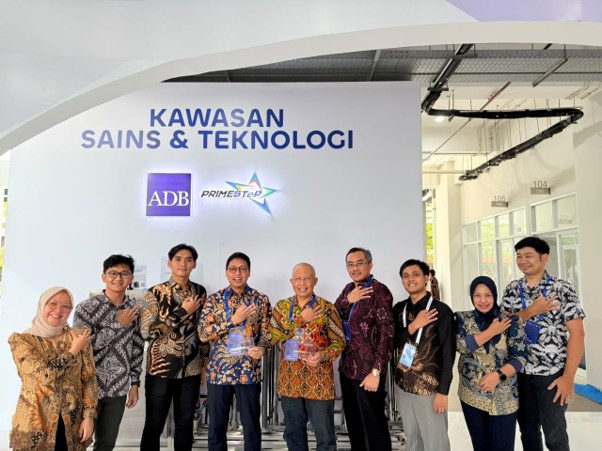
Research breakthroughs from the laboratories of the Faculty of Mathematics and Natural Sciences (FMIPA) of Universitas Gadjah Mada (UGM) stepped into the spotlight as ready-to-deploy solutions at the 2026 Indonesian Science, Technology, and Industry Convention (KSTI), hosted by the Ministry of Higher Education, Science, and Technology at the Institut Teknologi Sepuluh Nopember (ITS) in Surabaya from November 11 to 13, 2026. Two applied technological devices developed by FMIPA UGM researchers were showcased directly to industry players, government officials, and prospective strategic partners.
The two products are HYDROS, an emergency drinking water treatment unit powered by the Multistage Hydroplasma Oxidation System (MHOS), and TRACE-TB Electronic Nose (E-Nose TB), an early Tuberculosis screening device built on breath analysis and artificial intelligence. Both innovations stand among 13 flagship products brought forward by UGM through the UGM Science Techno Park (UGM STP) and the Promoting Research and Innovation through Modern and Efficient Science and Technology Park (PRIME STeP) program.
HYDROS: Practical Potable Water Solutions in Disaster Zones
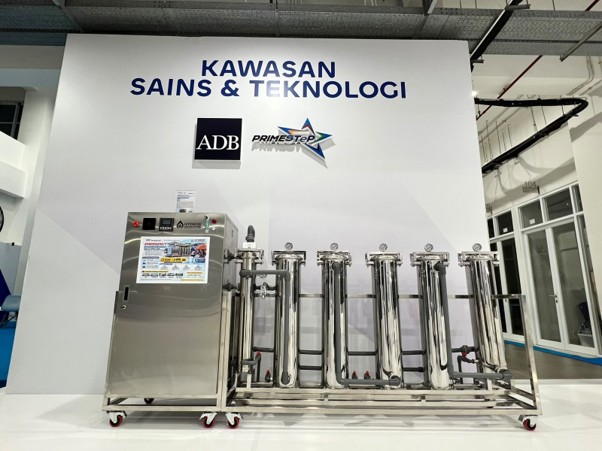
Engineered by FMIPA UGM Department of Physics Professor Prof. Dr. Eng. Kuwat Triyana, M.Si., in collaboration with PT Satria Duta Raya and backed by PRIME STeP, HYDROS enters the field as a high-capacity potable water treatment machine. Relying on MHOS technology, the unit turns raw water from rivers, wells, and lakes into safe drinking water through initial filtration (disc filters), controlled ozone disinfection, multistage filtration (silica, zeolite, manganese, carbon), and PVDF ultrafiltration.
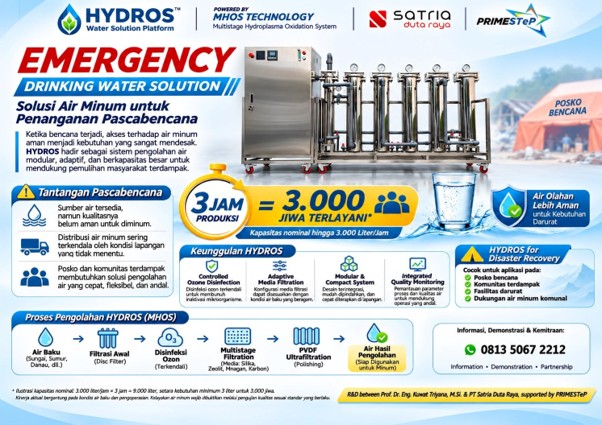
With a nominal production capacity reaching 3,000 liters per hour, a single HYDROS unit can put out 9,000 liters of treated water in just three hours of operation, enough to meet the drinking water needs of 3,000 people. This capability is tailored to tackle post-disaster challenges, where available water sources often remain unsafe to consume while clean water distribution gets held up by difficult terrain.
Its operational edge is further backed up by a compact, modular design that makes it easy to move into disaster command posts and emergency facilities. The system also comes with integrated water quality monitoring to keep field operations measurable and reliable.
E-Nose TB: Fast, Portable, and Painless TB Screening

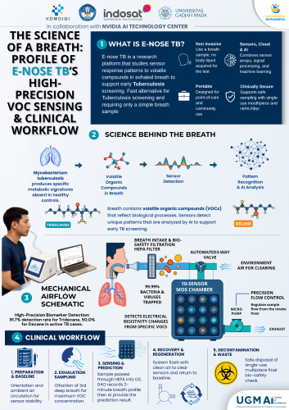
Building on the development of GeNose C19, the research team rolled out E-Nose TB as a portable early Tuberculosis screening alternative tailored for primary healthcare facilities and local communities. Without requiring bodily fluid samples, the device simply takes in a two-minute breath sample. Inside, 10 Metal Oxide Semiconductor (MOS) sensors pick up specific volatile organic compound (VOC) patterns produced by Mycobacterium tuberculosis bacteria.
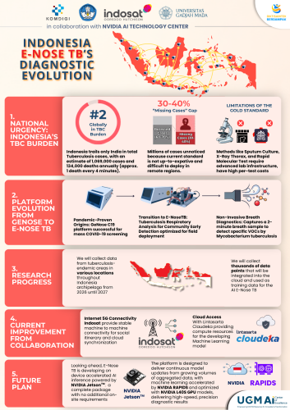
The arrival of this innovation answers the call for more practical detection methods on the ground. Indonesia continues to grapple with the world’s second-highest Tuberculosis burden, with 30 to 40 percent of cases still going undetected. Meanwhile, conventional methods like sputum cultures and rapid molecular tests often call for advanced laboratory infrastructure and carry high per-test costs.
To ensure clinical safety, the device relies on single-use mouthpieces and HEPA filters capable of trapping 99.99% of bacteria and viruses. Its development is backed by an industry-grade tech ecosystem forged alongside Komdigi, Indosat Ooredoo Hutchison, Lintasarta Cloudeka, and the NVIDIA AI Technology Center. Throughout 2026 and 2027, the research team is gathering thousands of data samples from endemic regions across Indonesia to fine-tune the accuracy of its artificial intelligence models.
Opening Up Collaboration and Market Adoption
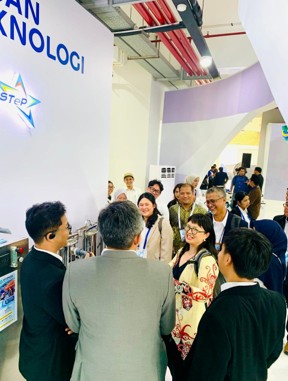
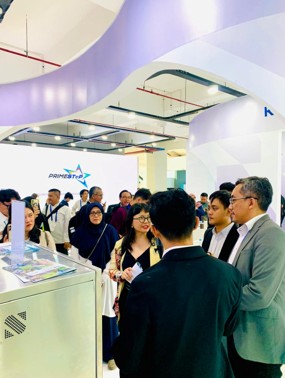
The presence of both innovations at KSTI 2026 also tied into the UGM Innovation Spotlight 2026 forum on Thursday (Nov. 12), which brought inventors face-to-face with 20 representatives from associations, corporations, hospitals, and Islamic boarding schools. The agenda also featured the signing of cooperation agreements with nine strategic partners to speed up technology licensing, production, and distribution.
UGM Vice-Rector for Research, Business Development, and Cooperation, Dr. Danang Sri Hadmoko, S.Si., M.Sc., noted that university research must align with product readiness and real-world user needs. “The success of an innovation is not merely measured by producing new technology, but by the extent to which that technology can be adopted, utilized, and deliver tangible impact,” he said in a UGM press release on Thursday (Nov. 12).
Through HYDROS and E-Nose TB, FMIPA UGM researchers put forward science-based technological options that are measurable, efficient, and ready to be taken up by industry partners and institutions seeking concrete solutions in the field.

Author: Inna Mutifah
Photos: Arief Zudanto